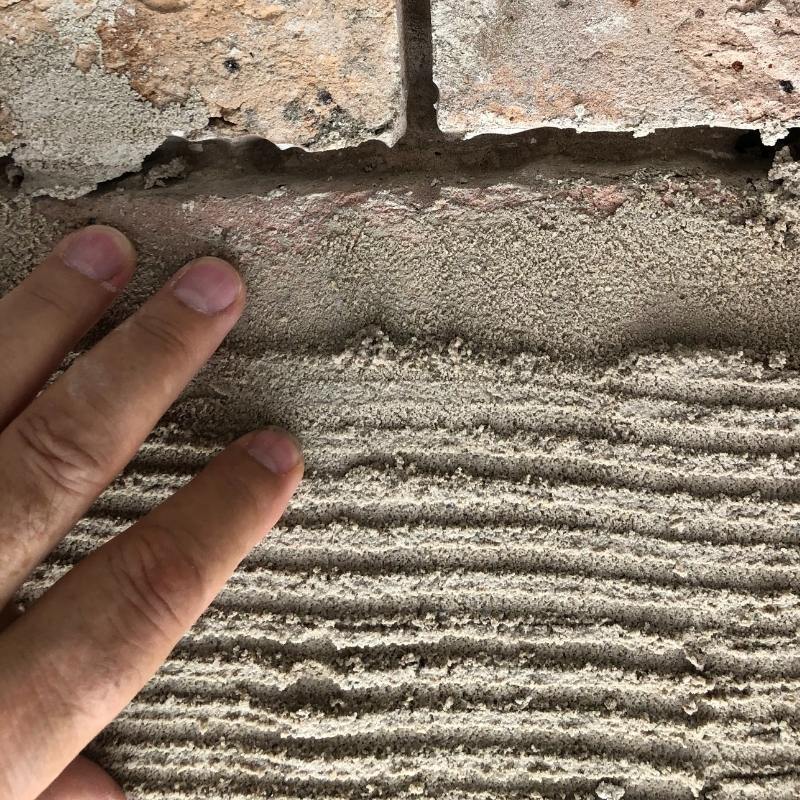
Throughout history, traditional plastering methods have always reflected the local materials available to builders. Before modern transportation and industrial production, construction relied entirely on regional resources: lime plaster in colonial America and ancient Rome, gypsum mortars in Egypt, earthen plaster in Indigenous North American dwellings, and plaster of Paris in medieval France. As infrastructure expanded, these materials traveled further, yet their regional origins and performance characteristics remained essential to building practice.
In the United States, the term traditional plaster still refers primarily to lime-based plaster. Archaeological research documenting lime plaster use across Syria and Turkey—dating back more than 14,000 years—positions lime as one of the world’s most enduring construction materials. Its continued relevance reflects its proven durability, adaptability, and compatibility with historic structures.
Archaeological evidence shows that communities in the Levant were using lime plaster as early as 12,000 BC, long before the development of pottery or settled agriculture. Early builders understood lime’s stabilizing properties and used it to reinforce dwellings even in semi-nomadic societies.
Over time, plastering traditions evolved according to regional materials and climate:
Across all cultures, the foundational process remained similar: combining a binder with aggregates and applying the mixture by hand. The essential motions familiar to plasterers today—loading a trowel, spreading material on lath, smoothing and compacting—connect modern practice with ancient tradition.
Historic American buildings display a clear progression in plaster materials. Early settlers used a clay–lime–sand–hair mixture applied to hand-split wooden lath. This formulation eventually evolved into a more consistent lime–sand–hair plaster, which became the dominant interior finish throughout the 18th and 19th centuries.
The shift to gypsum and Portland cement plasters in the early 20th century transformed construction timelines. Faster set times suited industrial building demands, and gypsum board began appearing in homes by the 1920s. Still, lime plaster remained in use well into the 1930s, and many surviving examples outperform their modern replacements in flexibility, breathability, and long-term stability.
Today’s construction and restoration professionals can select from numerous plaster systems:
While each system has specific advantages, none replicate the breathability, movement tolerance, or historical accuracy of true lime plaster in heritage buildings.
Lime plaster occupies a unique position among building materials because of its carbonation-based curing process. Unlike gypsum—which sets chemically—or Portland cement—which gains strength through hydration, lime cures by absorbing carbon dioxide from the atmosphere. This slow, natural reaction contributes to lime’s flexibility, vapor permeability, and resilience in fluctuating environmental conditions.
High-performance lime plasters, such as those manufactured by US Heritage Group, are defined by:
These characteristics allow lime plaster to:
By contrast, modern bagged hydrated lime carbonates as soon as it is packaged, reducing its suitability for traditional plastering.
A persistent misconception in historic restoration is the belief that harder plasters are more durable. Experience across Europe and North America has consistently shown that softer lime plasters often outlast harder substitutes.
Historic buildings are inherently dynamic. Seasonal humidity, frame movement, thermal expansion, and settling place constant stress on interior surfaces. Rigid materials resist this movement and crack under pressure, while lime plaster—being softer and more flexible—absorbs and dissipates that movement.
The comparison is simple: a rigid material reacts like an oak tree under storm winds, while a flexible material resembles a willow that bends without breaking.
This is why no modern plaster system equals the longevity of an original lime plaster assembly from the 18th or 19th century.
Modern plaster systems are engineered for performance criteria unrelated to historic construction. These materials frequently clash with the environmental and structural needs of older buildings:
In contrast, historic structures—such as the timber-framed homes of New England—were built as layered, breathable systems designed to allow vapor migration and controlled movement. Typical historic assemblies include:
Introducing rigid, vapor-impermeable modern materials disrupts this balance, often causing accelerated deterioration.
Historic plastering began with slaking lime in sand pits, producing layered material that craftsmen mixed into coarse stuff—the base-coat plaster. Animal hair was added for tensile strength just prior to application.
The traditional three-coat system remains the gold standard for historic workmanship:
Historically, “plaster” referred to interior work and “stucco” to exterior surfaces, though both used similar lime-based formulations. These materials remain the most compatible with historic masonry and timber structures.
The fundamentals of lime chemistry remain unchanged, but application technologies have advanced significantly. Today, professional contractors increasingly use:
US Heritage Group supports these modern techniques with:
These innovations enable lime plaster to meet contemporary scheduling demands while maintaining historic accuracy and long-term performance.
In preservation work, repair is almost always preferable to replacement. Lime plaster continues to strengthen for decades, making it uniquely suited for long-term service in historic buildings.
The most effective repair method is re-adhesion using flexible, injection-grade adhesives that stabilize delaminated plaster without introducing rigid hardware. This approach preserves the existing plaster and maintains the building’s historic fabric.
Mechanical fastening systems—like plaster washers and screws—often cause additional cracking by concentrating stress at fixed points. Repairs completed with these methods tend to re-fail and require repeated intervention.
When historic plaster is stabilized and patched correctly, it can remain functional indefinitely.
From prehistoric dwellings to 18th-century homes and modern conservation projects, lime plaster remains unmatched in compatibility, durability, and performance. Its breathability, flexibility, and proven track record make it the optimal material for restoring historic buildings.
At US Heritage Group, we continue this tradition by manufacturing authentic lime plasters, lime mortars, and lime binders formulated for historic preservation professionals. Whether applied by hand or through modern spray systems, our materials provide the performance, accuracy, and longevity required for responsible conservation.
Lime plaster is a traditional building material made from lime putty and sand. It is used in historic buildings because it is breathable, flexible, salt-resistant, and compatible with historic masonry and wood assemblies. Lime plaster allows moisture to pass through walls naturally, preventing trapped moisture and reducing deterioration in older structures.
Lime plaster cures slowly through carbonation, making it flexible and vapor-permeable.
Gypsum plaster sets quickly and becomes rigid, while Portland cement stucco is dense, hard, and non-breathable.
In historic buildings, lime plaster is preferred because modern hard plasters can trap moisture, crack under movement, and damage original materials.
No. Modern materials such as gypsum, cement, or acrylic mixes are not compatible with traditional wall systems. They are either too rigid or not breathable.
Historic lime plaster performs better because it can move with the structure, regulate humidity, and remain stable for centuries.
Yes. Lime plaster has been used inside and outside buildings for thousands of years. When formulated correctly, lime plaster provides excellent weather resistance, UV stability, and moisture management.
US Heritage Group offers exterior-grade lime plasters and lime mortars designed for long-term performance in demanding conditions.
Yes. Modern equipment allows lime plaster to be sprayed or pumped efficiently, especially on large surfaces.
US Heritage Group manufactures pre-formulated lime plasters and bulk lime putty specifically suited for mechanical application, increasing productivity without changing the historic material composition.
Common causes include:
When plaster detaches, a flexible re-adhesion injection system is the most effective repair method.
The recommended method is re-adhesion using flexible injection adhesives designed for historic materials.
This stabilizes the plaster without introducing rigid washers or screws. After stabilization, cracks and voids can be filled with lime-based patching materials.
Mechanically fastening plaster with washers is not recommended because it concentrates stress, causes new cracks, and often fails again.
When applied correctly and maintained, lime plaster can last hundreds or even thousands of years. Its longevity is one of the reasons it remains the preferred material among conservation professionals and historic preservation architects.
Yes. Lime plaster is highly vapor permeable, allowing moisture to move freely through wall systems. This prevents trapped moisture, reduces freeze–thaw damage, and helps regulate indoor humidity. Cement and acrylic coatings do the opposite — they seal walls and trap moisture inside.
Absolutely. Many architects specify lime plaster in new buildings because it provides:
Lime plaster is also ideal for high-performance, passive, and natural-building applications.
For traditional plastering, high-calcium lime putty is the preferred binder.
US Heritage Group produces lime putty with:
Bagged hydrated lime is not recommended because it begins carbonating during storage, reducing its reactivity and performance.
Historic lime plaster is typically installed in three coats:
Thickness varies by region and period, but multi-layer systems ensure durability, breathability, and flexibility.
Yes — but only when using the correct system.
A lime-based veneer or bonding system must be used to ensure adhesion.
For historic accuracy, lime plaster is typically applied over wood lath, masonry, or woven substrate, not directly onto gypsum board.
Traditional finishes include:
These finishes preserve vapor permeability, which is essential for both historic and high-performance wall systems.
Yes. US Heritage Group offers technical training, product support, and hands-on guidance for contractors, architects, and preservation professionals.
Training covers:
Authentic lime plasters, mortars, and high-calcium lime putty are available directly from US Heritage Group.
Products are engineered in accordance with historic preservation standards, including compatibility with 18th–20th century materials and modern conservation requirements.